Prototyping the Magnum Hydro Ice glorifiers
The display had to be a larger version of the product itself: the same shape, the same feel, close enough that you read it as a Hydro Ice before you read it as a display. It also had to stop someone at the point of sale, and carry the thing the product is actually known for, which is how it looks in a dark club under UV.
There were six weeks. That decided the method: iterate rather than specify. Each round was the shortest way to find out what the materials actually did, and it kept produceability in front of us the whole time. On a deadline that short there is no room to find out at the end that a part cannot be made.
— Unilever — six weeks
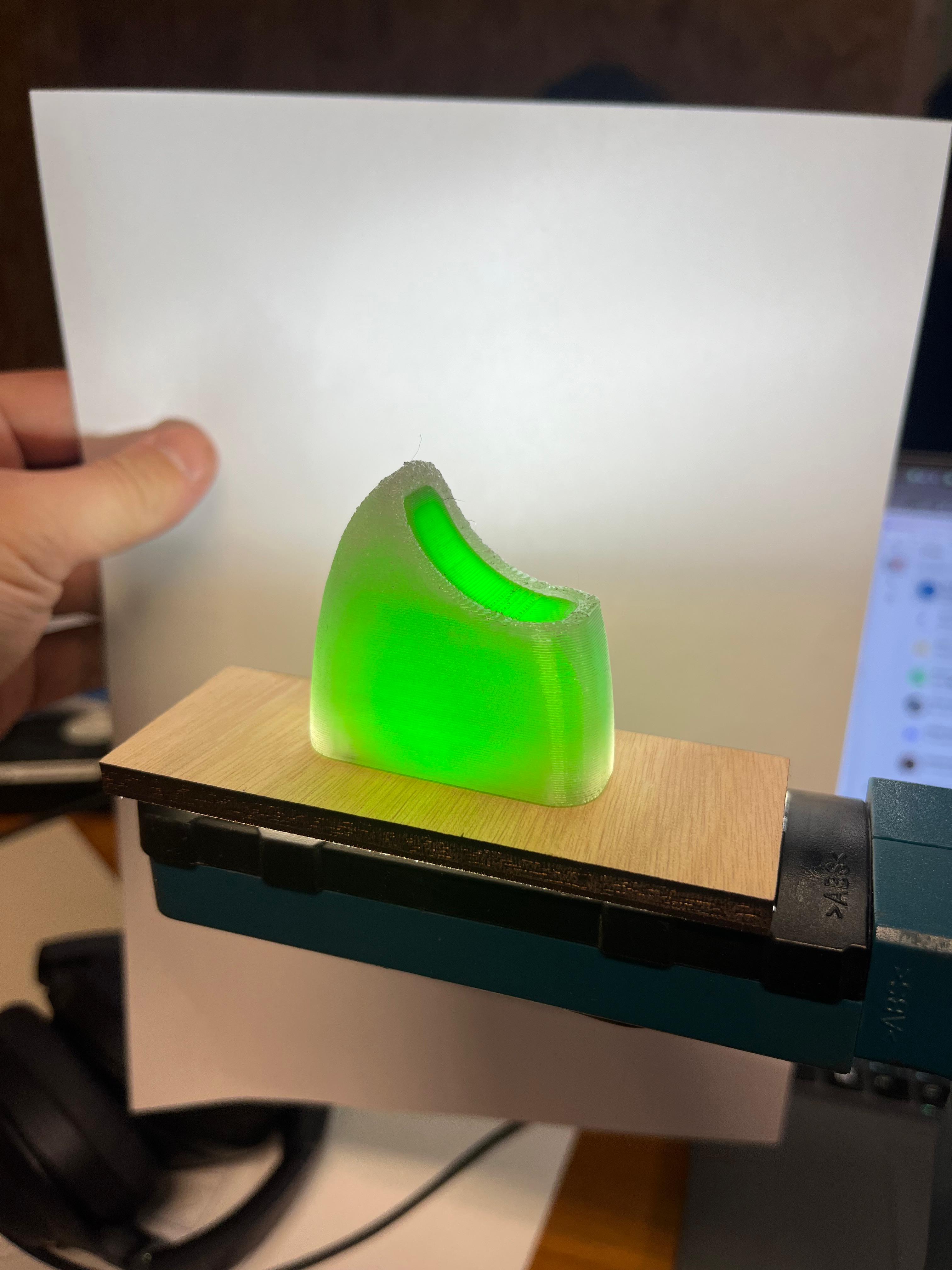
Does light even travel through it
We started with the smallest question we could answer: how does light behave inside a 3D printed popsicle? One printed tip, one work light. It told us the material would carry a glow, which is the only thing the rest of the project depended on.
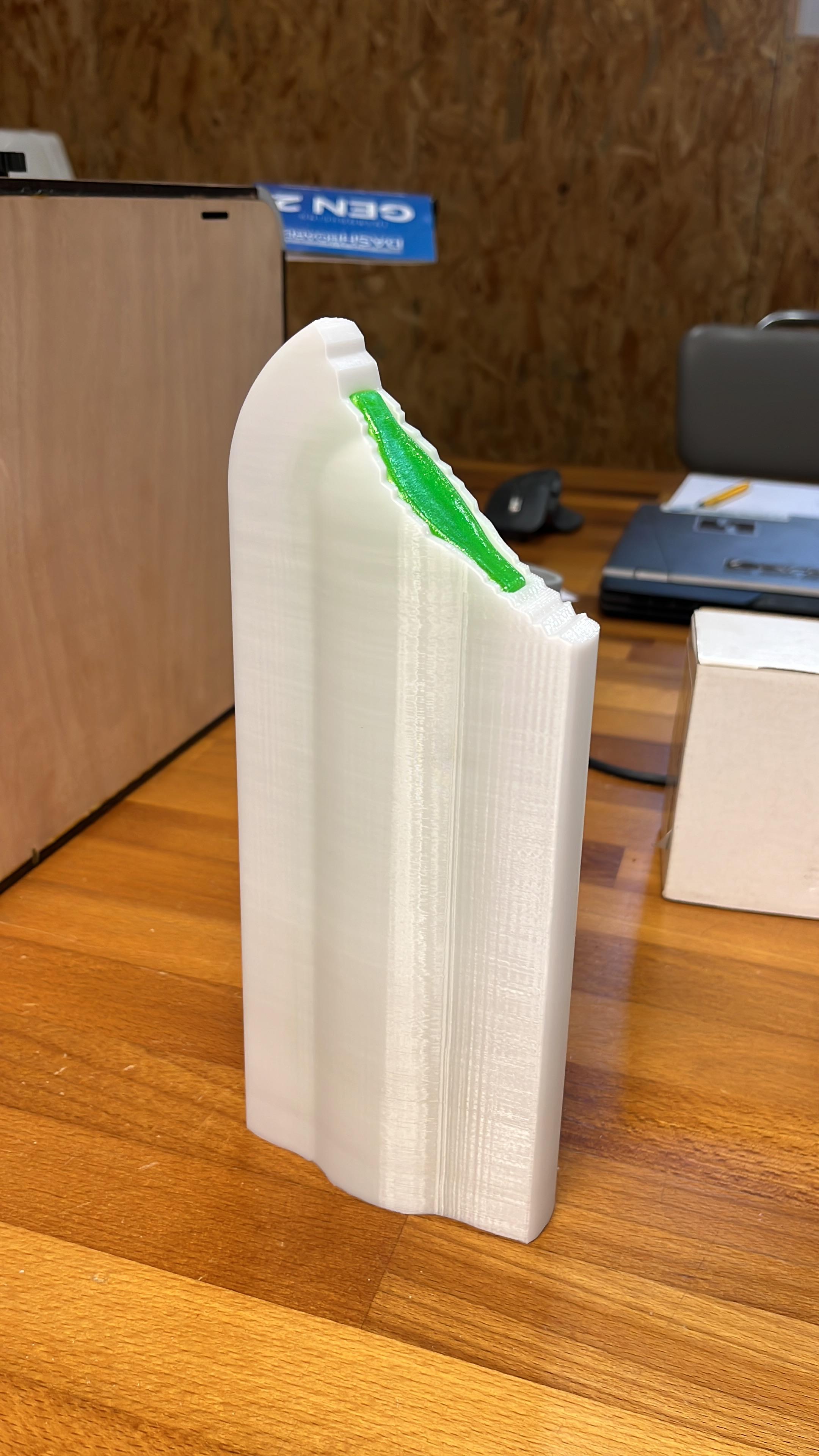
Two materials, one print
The first full popsicle was printed in two materials, one for the core and one for the skin, to mimic the structure of the real Hydro Ice as closely as we could: a green core with a lighter outer shell.
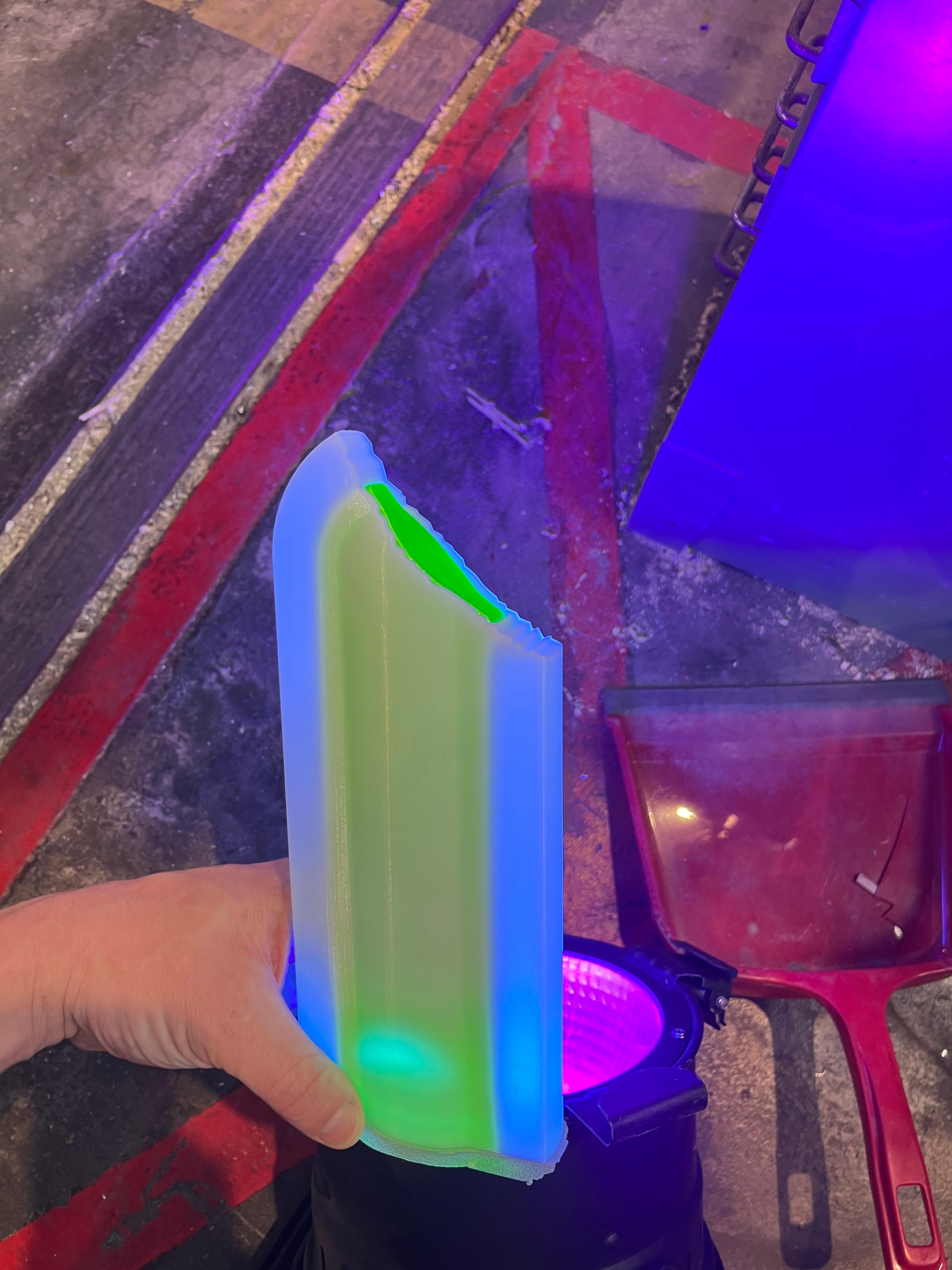
Then we put it under UV. Hydro Ice reacts to club lighting, and the display had no business existing if it could not show that.
Resin casting, and why we dropped it
We cast a version in resin around a laser-cut acrylic core. That particular build was dropped: getting a realistic result out of it was harder than expected. It did settle the direction though. Resin casting was clearly the way to go, because a printed core could be reproduced consistently and left an air space inside for the LED to sit in.
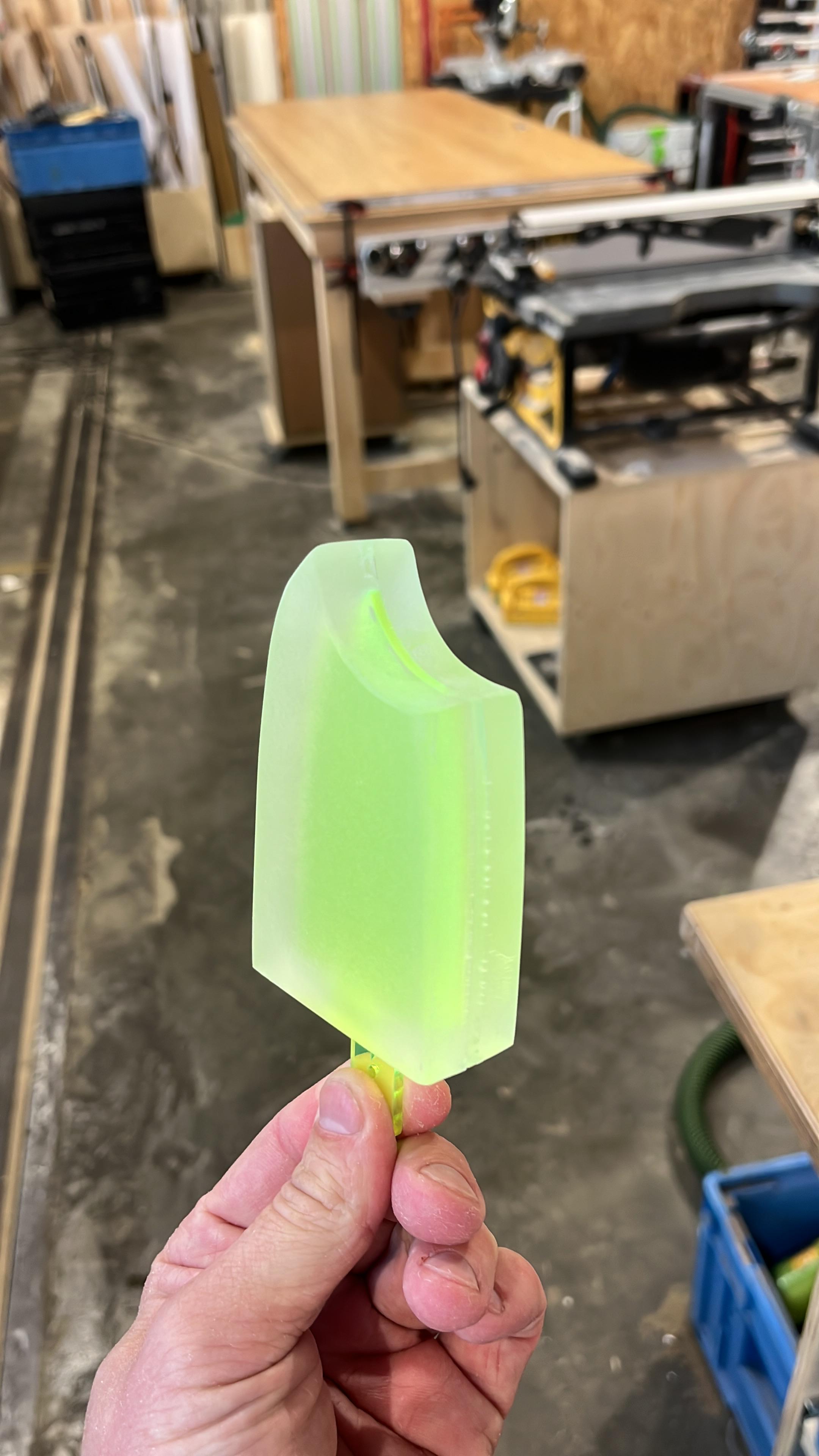
What survived was the hybrid: a printed core carrying a positioned hole for the LED, cast in a translucent shell. The core holds the tolerance, the cast does the diffusing.
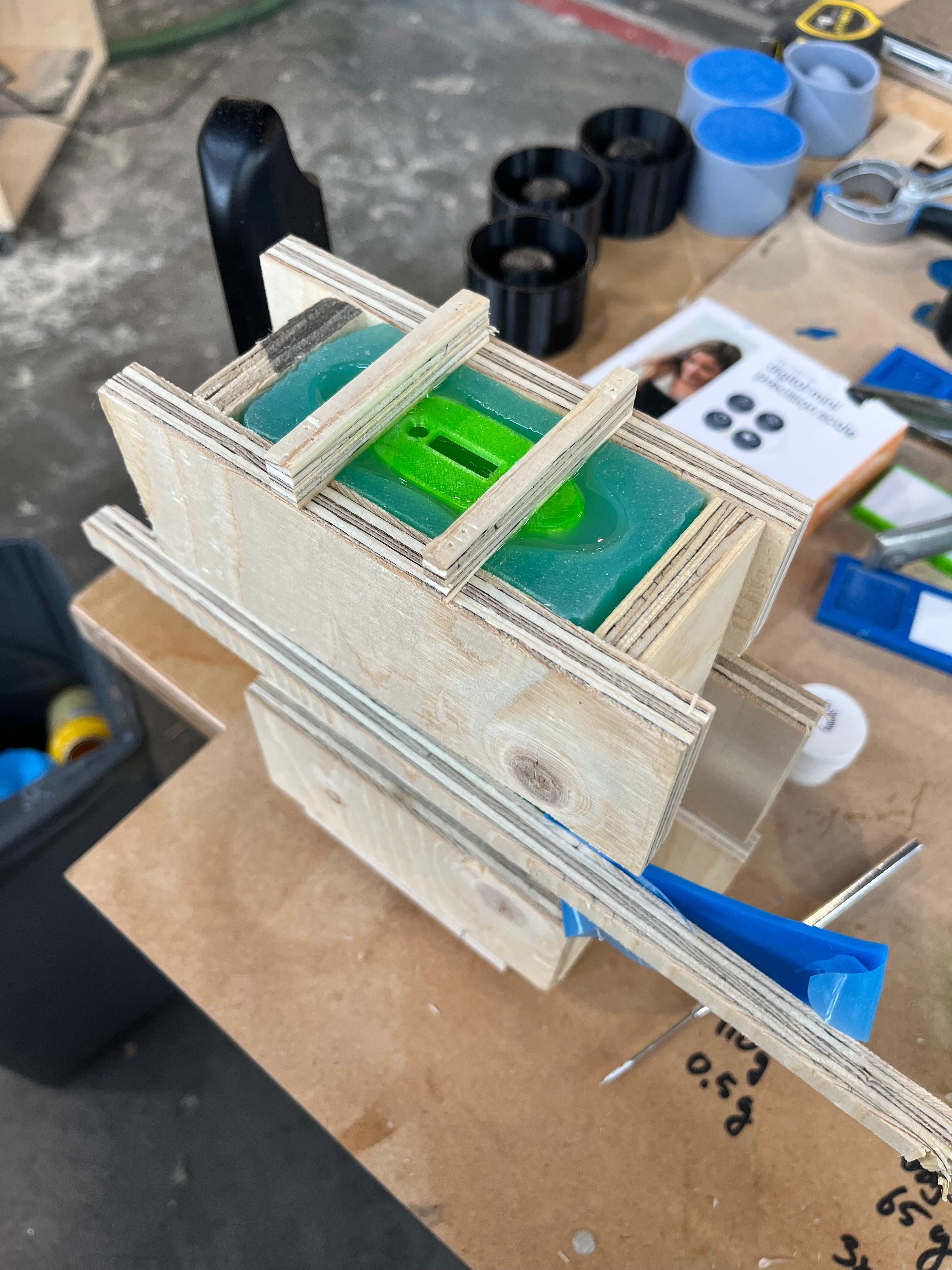
The base is the hard part
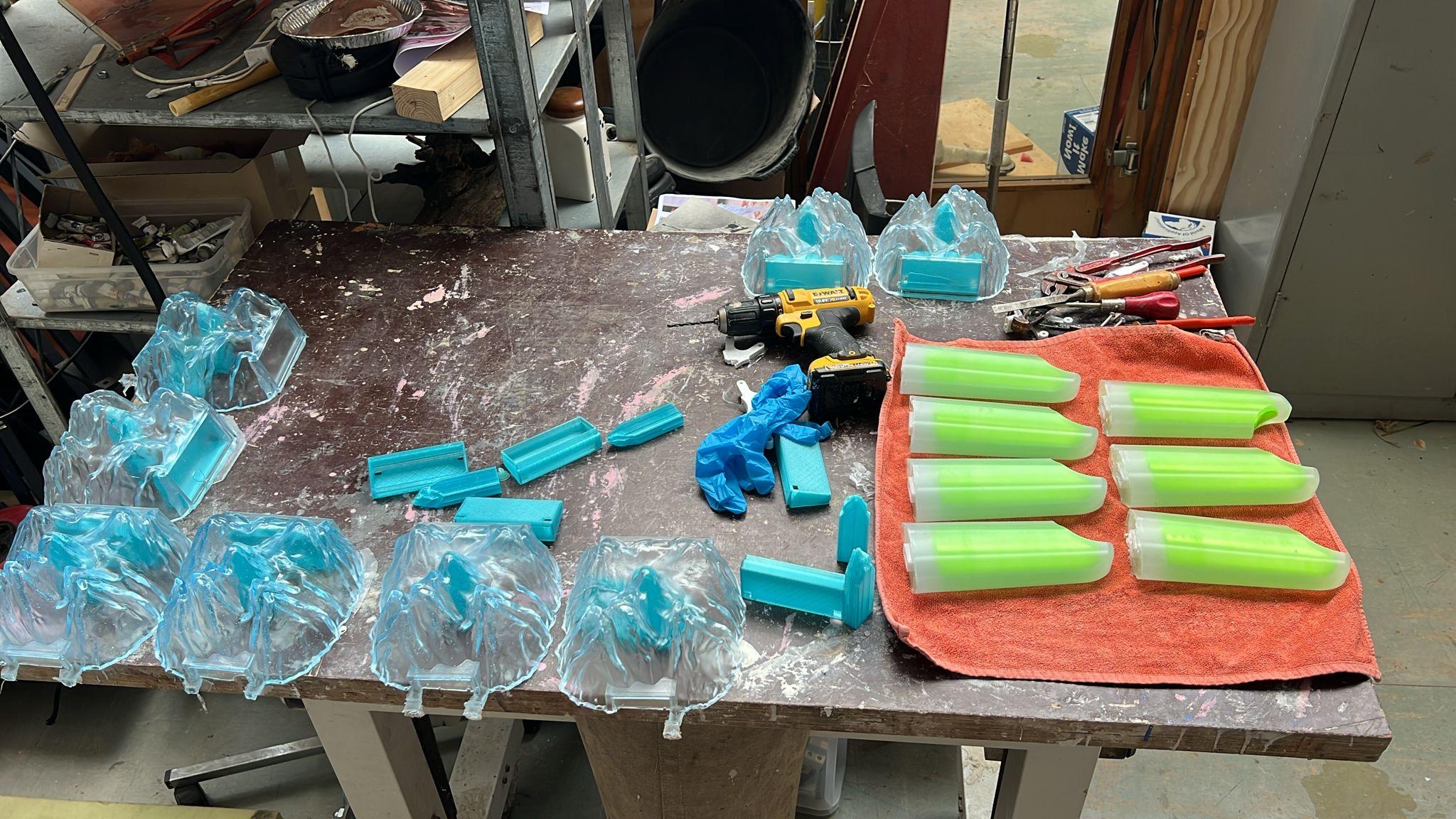
The base took more iterations than everything else combined. First getting an iceberg shape that actually looked like ice, then SLA printing it, then building moulds to cast from. Each round turned up a new problem to solve, and the shape only stopped changing once the casting, the electronics and the assembly all worked at the same time.
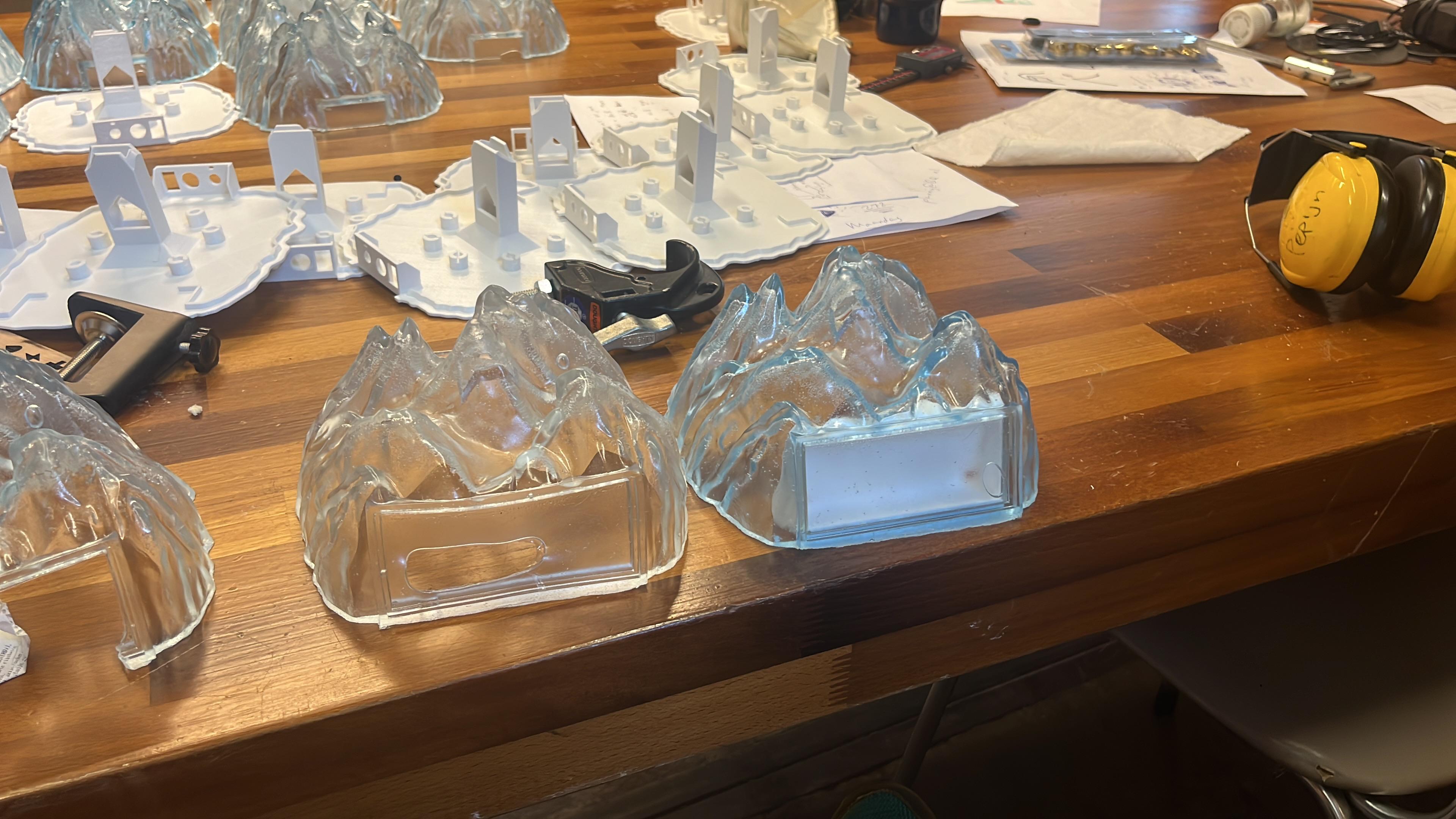
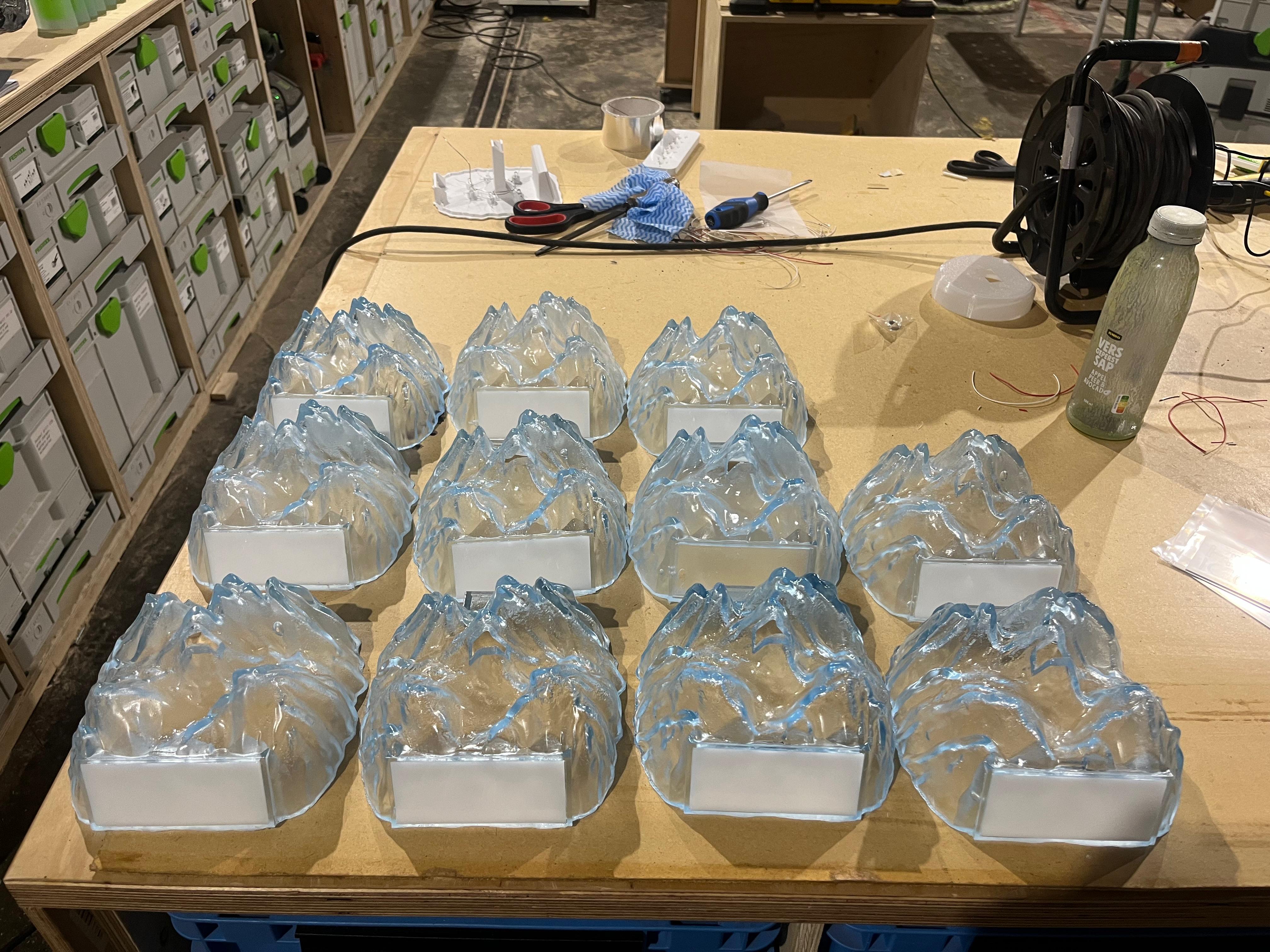
Assembly and out the door
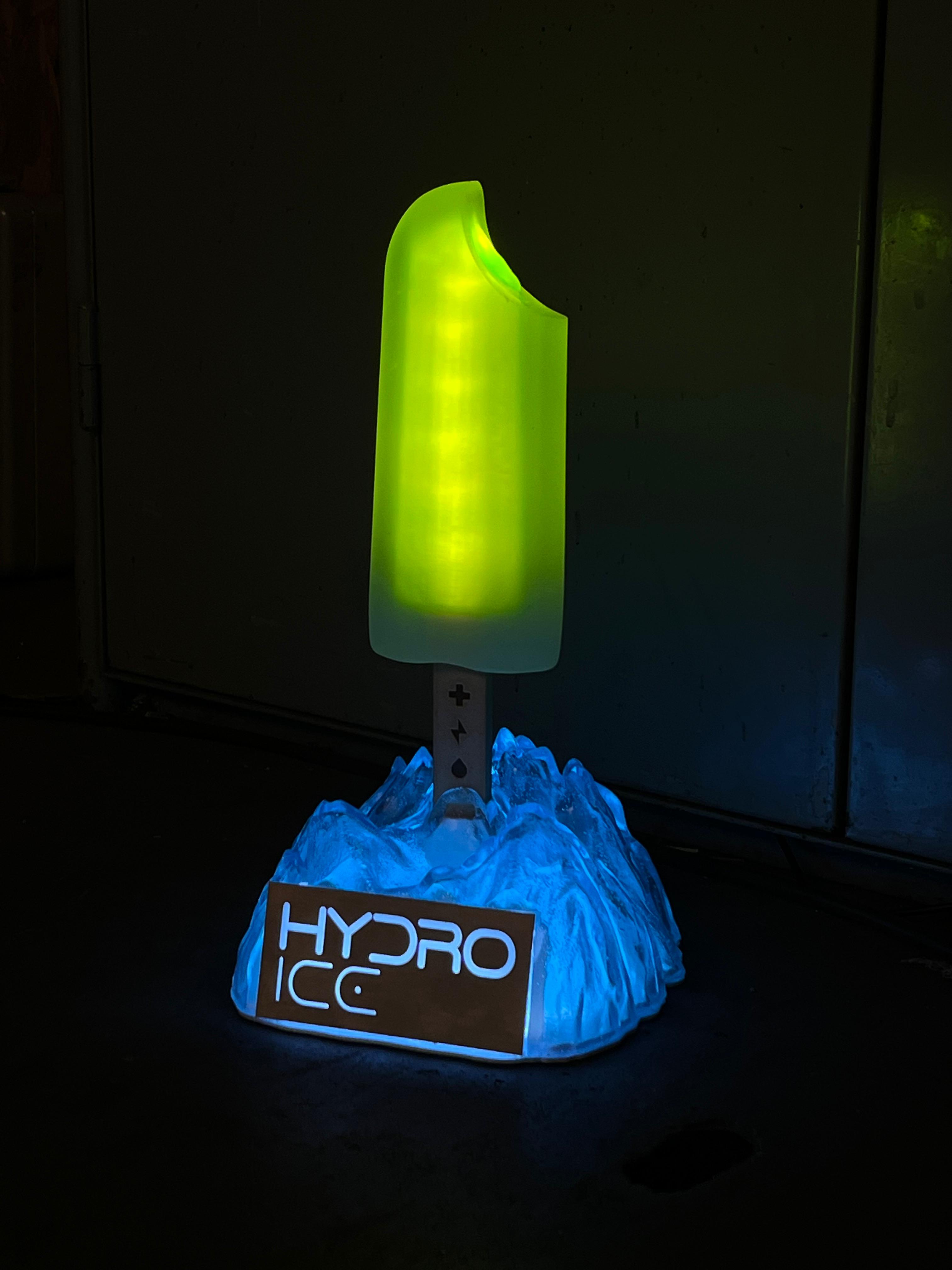
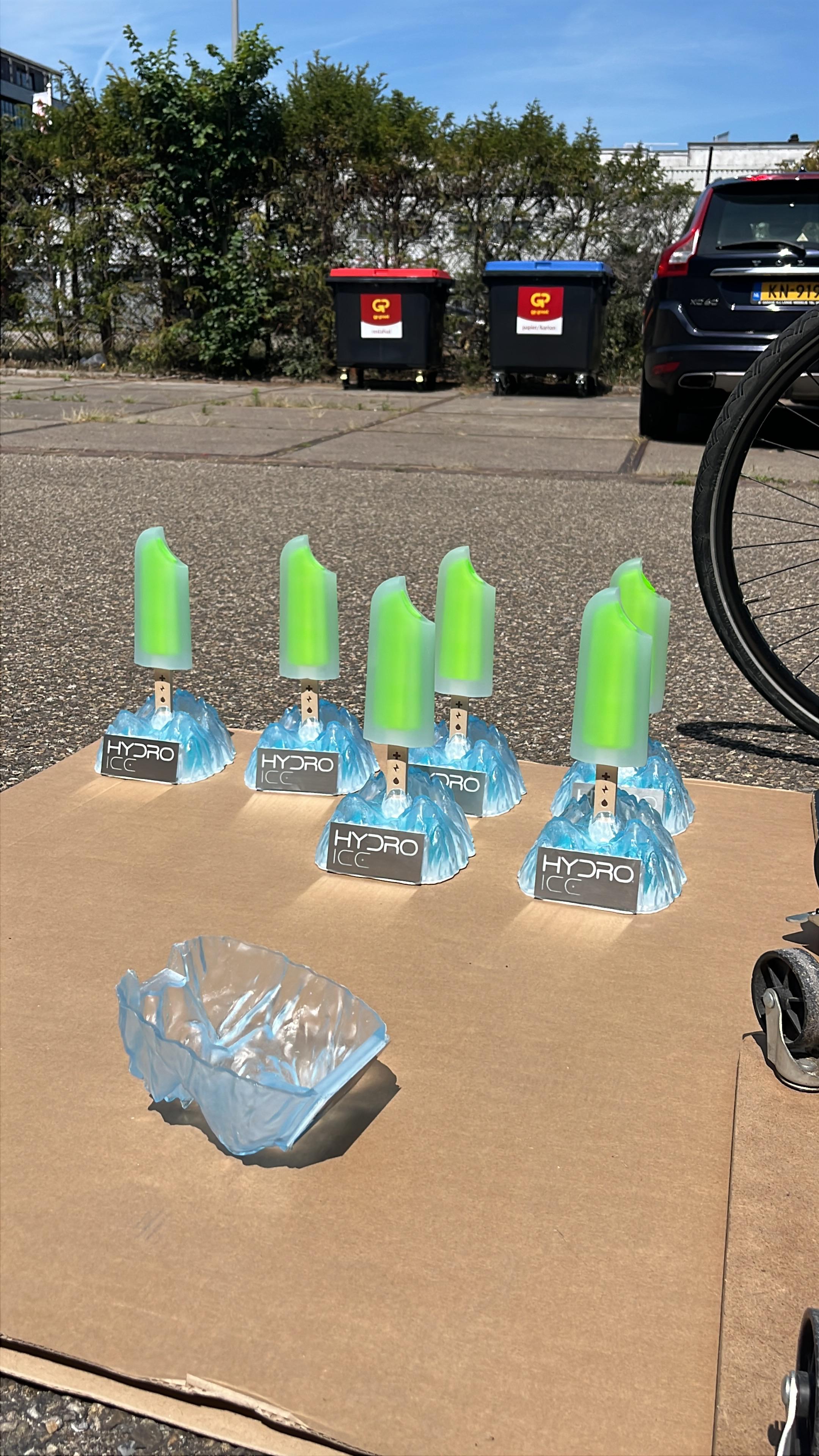
Green popsicle, blue base, Magnum branding. The warm-against-cool contrast is what makes the thing read as refreshing from across a shop floor.
What it took
No single technique got there. It took FDM and SLA printing, 3D printed moulds to cast from, resin casting, and custom electronics, each covering for what the others could not do.
We did the small batch manufacturing ourselves as well, which is the part that usually gets handed off. Keeping it in the room meant the design could still change while it was being made.
A similar problem?
Send us the brief and we will tell you what it takes to build.
info@physicalmatter.nl